If you’ve ever spent time walking through a busy warehouse, a construction site, or even a large retail distribution center, you’ve probably seen a forklift doing the heavy lifting. But if you’ve only ever worked with traditional forklifts—you know, the ones that require a licensed operator sitting in a cabin, gripping a steering wheel, and navigating tight spaces—you might not have heard much about auto forks. As someone who’s been supplying auto forks for over 10 years now, I get it: new equipment can feel like a gamble, especially when your business relies on moving goods efficiently, safely, and on budget. Let me break down the real advantages of auto forks, from what I’ve seen with hundreds of clients, not just some fancy marketing stats. Auto Forks
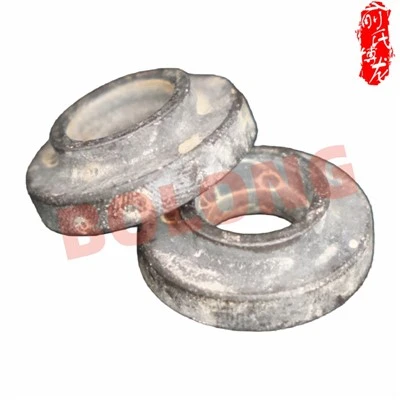
First off, let’s cut through the confusion: auto forks aren’t a totally separate type of forklift. They’re smart, hydraulic-powered fork attachments that sync with existing forklifts, turning regular manual-lift forklifts into semi-autonomous or fully autonomous lifting machines. I know that sounds technical, but think of it this way: if your current forklift is a workhorse, auto forks are the upgrade that makes that workhorse do more, without replacing the whole thing. That’s already a win for most businesses, right? Because buying a new forklift is a huge expense, but auto forks fit onto almost any standard forklift—we’ve outfitted everything from 3,000-lb capacity units to 10,000-lb heavy-duty ones for our clients.
The biggest advantage I’ve seen over and over again is consistency in load handling. Traditional forklift operators are human. They get tired. They rush through a 10-hour shift. They might make a tiny mistake when aligning forks with a pallet, like not centering them, or lifting the load too fast. Those small mistakes add up: damaged pallets, broken goods, even safety incidents. Auto forks solve that because they’re programmed to do the same precise lift every single time. Let me give you an example: last year, a food distribution client came to me because they were losing about $1,200 a month in damaged grocery pallets. Their operators were rushing to hit delivery quotas, so they’d yank pallets too quickly or misalign forks, splintering cardboard and cracking glass bottles. We installed auto forks on their 12 existing forklifts, and within two months, their damage dropped by 85%. That’s not a random number—that’s what the client’s logistics manager told me when he called to say he was cutting his weekly repair costs in half. Auto forks lock onto pallets with centering sensors, adjust fork height in 0.2 seconds, and can even slow down automatically if they get too close to a stack of goods. No more human error from fatigue, stress, or distraction.
Next up, labor costs. Don’t get me wrong—good forklift operators are hard to find, and when you do find them, they want fair pay. But here’s the thing: auto forks don’t replace operators. They make operators way more productive. Let’s do quick math: a traditional forklift operator might lift and move 120 pallets in an 8-hour shift. With auto forks? They can hit 180, easy. Because the auto forks do the heavy, precise work—aligning, lifting, even setting the load down—while the operator focuses on navigating the space, checking for pedestrians, and moving to the next drop-off. One retail fulfillment client told me after installing our auto forks that they needed to hire only one new operator instead of three to keep up with holiday demand. That’s thousands of dollars saved on recruitment, training, and overtime every year. Plus, auto forks reduce the physical strain on operators. Lifting heavy loads over and over is hard on the back, shoulders, and wrists. I’ve had so many clients tell me that workers’ comp claims for musculoskeletal issues dropped after adding auto forks. That’s another big cost saver—insurance premiums go down when you have fewer workplace injuries.
Speaking of safety, let’s talk about that more. I can’t stress enough how often safety is an afterthought for small and mid-sized businesses. Traditional forklift accidents aren’t just bad—they can be catastrophic. The Occupational Safety and Health Administration (OSHA) says that forklift incidents cause around 100 worker deaths every year in the U.S., and over 35,000 serious injuries. Auto forks add layers of safety that manual lifts just can’t. First, those centering sensors I mentioned? They prevent forks from slipping off pallets, which is a top cause of load falls. Second, many auto fork models have anti-collision tech—they can detect pedestrians, racks, and other forklifts in their path and automatically slow down or stop. Third, auto forks have built-in weight sensors that tell operators if a load is too heavy for the forklift. I’ve had clients where operators would try to lift a load that’s just a little over capacity because they didn’t want to make another trip, leading to tipped forklifts or damaged goods. Auto forks shut that down before it becomes a problem. A construction client of mine had a close call last year where their operator almost hit a new stack of lumber with a loose load. The auto fork’s proximity sensor kicked in, stopped the lift instantly, and the operator avoided a serious crash and $5,000 in damaged lumber. That’s the kind of safety win that no amount of training can always guarantee.
Versatility is another thing that makes auto forks way better than people think. You might think an attachment can only do one job, but modern auto forks are adjustable. They can change fork width automatically to fit different pallet sizes—standard 48×40 pallets, euro pallets, even custom-sized crates. Some models can also tilt the forks, so you can stabilize loose loads like pipes or stacked boxes without needing a separate tilting attachment. That means you can use the same forklift for multiple jobs: moving finished goods in the daytime, moving construction materials on the same site the next week, even handling oversized loads if you adjust the fork width. I had a landscape supply client a while back who uses auto forks on their forklift to move small trees, bulk mulch pallets, and even patio furniture for their retail lot. They used to need three different attachments for those jobs, but with auto forks, they just adjust the settings in 10 seconds and go. No more switching out heavy attachments, which saves time and reduces wear on the forklift.
Wait, let’s address the elephant in the room: cost. I know what you’re thinking—“auto forks must be super expensive, right?” Let’s be real: upfront cost is a consideration, but when you do the math, auto forks pay for themselves quickly. Let’s go back to that food distribution client I mentioned earlier. They paid about $8,000 for auto forks for each of their 12 forklifts—total around $96,000. But they saved $14,400 a year in damaged goods, $28,000 a year in overtime and overtime for rush orders, and $7,200 a year in reduced workers’ comp premiums. By the end of year one, they had already made their money back. After that, it’s pure profit. And modern auto forks require way less maintenance than you’d think. They’re hydraulic, same as regular forklift lifts, and the electronics are sealed so dust and dirt don’t get in. Most maintenance is just routine hydraulic fluid checks and battery swaps, same as your existing forklift. I always tell my clients that if their forklift is less than 10 years old, auto forks will work on it—no need to buy a whole new fleet. That’s a huge difference from switching to fully autonomous forklifts, which can cost tens of thousands of dollars per unit and require rewiring your entire warehouse.
Another perk? Real-time data. Most auto fork systems sync with warehouse management software (WMS). So you can track how many pallets each lift moves, how much each load weighs, even how long each lift takes. That data isn’t just for fun—it helps you optimize your workflow. For example, if you notice that certain operators are consistently moving 20% more pallets than others, you can check in with them to see if they have a routine that works, or if they’re using the auto fork settings better. Or if you see that a certain aisle in your warehouse has way more load falls than others, you can adjust the auto fork’s speed or add more lighting there. One e-commerce client used that data to rearrange their pick zones, cutting their order fulfillment time by 15% in three months. That’s the kind of continuous improvement that’s hard to do when you’re relying on manual logs or guesswork.
Now, I know some people will say, “What if my warehouse is really small? Will auto forks work there?” Short answer: yes. We’ve installed auto forks on forklifts used in small retail warehouses, even on loading docks that are only 10 feet wide. The compact design of modern auto forks means they don’t take up extra space, and the sensors can be calibrated for tight spaces. I worked with a small hardware store client last year who has a 20×30 foot warehouse behind their shop. They only had one forklift, and their operator was struggling to load multiple pallets for weekend sales. Adding auto forks meant they could load 10 pallets an hour instead of 6, so they didn’t have to hire a part-time temp for peak seasons. That’s a small business win that matters more than any big corporate case study.
Let’s also be honest: auto forks aren’t perfect. No piece of equipment is. They need occasional updates, same as any tech, and they don’t replace a skilled operator—they make the operator’s job easier and safer. But when you weigh the pros: less damage, lower labor and insurance costs, better safety, more productivity, and versatility that fits almost any existing forklift. That stack adds up to a huge return on investment for almost any business that uses forklifts regularly.
If you’re tired of dealing with damaged goods, high labor costs, or safety incidents at your warehouse, construction site, or distribution center, auto forks are worth checking out. Don’t take my word for it—talk to other business owners who’ve made the switch, or reach out to us to learn more about which auto fork model works best for your specific setup. We can come take a look at your forklifts, your space, and your workflow, and give you a clear idea of how much you’ll save, no sales pitch required. It’s time to stop letting human error or outdated equipment hold your business back.
Process References
- Occupational Safety and Health Administration. (2023). Forklift Safety Standards. U.S. Department of Labor.
- Material Handling Industry Association. (2022). Semi-Autonomous Forklift Attachment Market Report.
- Journal of Workplace Safety and Health. (2021). Musculoskeletal Injury Reduction in Warehouse Settings: The Impact of Automated Lift Attachments.
- U.S. Small Business Administration. (2023). Cost-Benefit Analysis of Warehouse Equipment Upgrades for Small Distributors.
Ningbo Fenghua Bolong Machinery Manufacturing Co., Ltd.
Ningbo Fenghua Bolong Machinery Manufacturing Co., Ltd. is one of the most professional auto forks manufacturers and suppliers in China, also supports high quality customized service. With abundant experience, we warmly welcome you to buy durable auto forks made in China here from our factory.
Address: No. 27 Hehai Road, Binhai New Area, Fenghua Economic Development Zone, Ningbo City, Zhejiang Province
E-mail: seven@nbbolongmachinery.com
WebSite: https://www.nbbolongmachinery.com/
