If you’ve ever shipped a 500kg industrial press from a factory in Guangzhou to a manufacturing plant in Brisbane, or a custom-designed glass swimming pool from a workshop in Shenzhen to a residential build on the Gold Coast, you know that standard small-parcel logistics just won’t cut it. For the past 12 years, I’ve run a small, family-owned large-item logistics company exclusively moving oversized and over-dimensional cargo between China and Australia, and one of the biggest lessons I’ve learned is that size and shape aren’t just details on a shipping label—they’re the backbone of every decision we make, from route planning to pricing, from Customs clearance to final delivery. Most importers think “large item” is just anything over a standard parcel limit, but in our line of work, size and shape dictate every step of the journey, and getting that wrong can turn a smooth shipment into a nightmare. Large-item Logistics From China To Australia
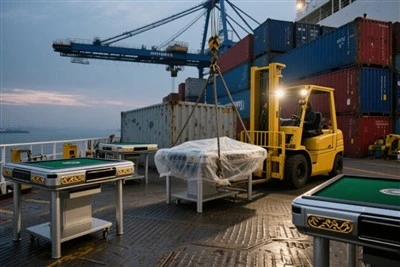
Let’s start with the basics: what makes a cargo “large” for our lane, and how its dimensions redefine the entire shipping process. For context, standard sea freight containers (20ft, 40ft, 40ft High Cube) have internal dimensions that max out at roughly 12m long, 2.35m wide, and 2.7m high—any item that exceeds those numbers is over-dimensional, and that’s where our work begins. But it’s not just the linear measurements; it’s how shape interacts with space that causes the most headaches. Take two common large items from China: a single 10m-long steel beam, and a 10m-long modular piece of factory equipment that’s 2.4m wide and 2.8m high. At first glance, both are over the 40ft container’s limits, but the steel beam can often be lashed across the top of a 40ft open-top container (designed for tall cargo) instead of needing special handling, while the bulky equipment would require a flat rack container—an open-sided, collapsible frame built to support extremely heavy or oddly shaped items. We’ve seen first-hand what happens when a client tells us their cargo is “just a big machine” without sharing its width or height: last year, a Melbourne-based construction company almost booked a standard 40ft container for a 11m-long excavator, only to realize it was 3.2m wide—too wide for even a flat rack container. We had to scramble to source an open-top 40ft high cube and rearrange its entire route, delaying delivery by 10 days and adding 30% to their costs, all because the initial quote didn’t account for that extra half-meter of width.
Then there’s weight, which is tied directly to size and shape and is one of the biggest pain points when shipping from China to Australia. Most standard sea freight containers have a maximum payload limit of around 28,000kg for a 40ft container, but that can vary by 2-3,000kg depending on the port of origin and the shipping line’s requirements. An over-dimensional cargo’s weight is often concentrated in a small area—think a 4-tonne generator that’s 2m long, 1.5m wide, and 2m high, vs. a 4-tonne batch of small furniture packed into multiple standard pallets. The generator’s concentrated weight means we can’t just stack it in a container; we have to reinforce the container’s floor with wooden blocking or steel plates, and sometimes even request a specific container type from the shipping line with a reinforced base, because standard containers aren’t built for point-heavy loads. For road transport in Australia, this is even more critical: each state has strict heavy vehicle regulations that dictate maximum axle weight, total vehicle weight, and the length of the load that can be on public roads without special permits. A 5m-long, 12-tonne transformer moving from Sydney Port to a factory in Western Sydney is straightforward, but a 12m-long, 22-tonne turbine moving from Brisbane Port to a remote mining site in Queensland will need a special oversize permit, and even then, the route has to be pre-surveyed to check for low bridges, narrow country roads, and power lines. We once had a shipment of 6 wind turbine blades (each 52m long) that we moved from Shanghai to Adelaide; the Australian road permit required us to adjust the delivery schedule to travel only at night on certain stretches of highway, and even then, we had to send a pilot car ahead of the truck to warn other drivers and clear intersections. None of these steps are in a standard small-parcel shipping guide—they’re all driven directly by the size and shape of the cargo.
Another often-overlooked area where size and shape impact logistics is cargo protection during transit. Standard parcels use bubble wrap and cardboard boxes, but large items need protection tailored to their specific dimensions and form. For example, a fragile 3m-long Chinese-made marble countertop that’s shaped with curved edges can’t be wrapped in generic foam—we have to custom-cut polyethylene foam to fit the curved sections, and then build a wooden crate that’s exactly sized to the countertop, with extra padding at the edges to prevent impact during loading and unloading. If we try to use a one-size-fits-all crate, the countertop can shift inside during the sea voyage, leading to cracks that make it unfit for installation. For bulkier, non-fragile items like steel girders, shape matters too: thin, elongated girders can scratch each other if they’re not separated with wooden spacers, whereas square steel beams can be stacked directly on top of each other with less risk. We recently worked with a furniture importer who shipped a batch of custom-made wooden chairs from Foshan to Perth; the chairs were shaped with delicate, carved backs, so we used individual fabric wraps for each chair, then arranged them in a flat rack container in a specific pattern to ensure the carved backs didn’t rub against each other. If we had just thrown them into a standard container, the cost to replace the damaged chairs would have been 40% of the total shipment value.
Customs clearance is another part of the process that’s heavily influenced by the size and shape of large items. Australia has strict biosecurity rules for imported goods, and large items often have hidden gaps, crevices, or hollow sections that can hold pests like insects, plant matter, or even rodents. A standard 2m-long metal frame is easier to inspect than a 15m-long modular shipping container frame with multiple hollow compartments, because inspectors have to check every section, and the size of the item means it can’t be moved around a small inspection shed. Last year, we had a shipment of prefabricated bathroom pods from Guangzhou to Darwin; the pods were 8m long, 3m wide, and 2.5m high, so they had to be inspected outside at the port, which delayed clearance by 5 days because a biosecurity officer had to bring special equipment to check the hollow wall sections. We also have to declare the exact dimensions and weight of large items to the Australian Border Force, and any misrepresentation can lead to fines or the shipment being held. For example, if an importer says a cargo is 10m long but it’s actually 11m, that’s a non-compliance issue with both shipping lines and Australian road regulators, and we as the logistics provider are often on the hook for the extra costs of correcting the documentation.
Pricing is, of course, the most tangible impact of size and shape on large-item logistics from China to Australia. Standard small-parcel pricing is based on weight or volumetric weight, whichever is higher, but large items add extra surcharges that vary based on their specific dimensions. A 2023 report from the Australian Logistics Council found that over-dimensional shipments can cost 20-50% more than standard freight for the same weight, and that number jumps to 70-100% for items that require special permits or flat rack containers. For example, a 5-tonne load of standard pallets from Shanghai to Melbourne might cost around $1,800 in sea freight plus local delivery, while a 5-tonne over-dimensional machine that’s 10m long, 2.5m wide would cost $3,500 or more, because of the flat rack container fee, special loading/unloading equipment, and Australian road permits. We also have to consider space utilization: if we have a choice between moving one large, oddly shaped item that takes up half a flat rack container, or a mix of smaller oversized items that fit into a full flat rack container, the full container load is always more cost-effective, so we advise clients to plan their shipments in batches whenever possible. That said, importers sometimes need single-item shipments, and in those cases, we work with our network of partners in both China and Australia to find the most efficient route, even if it’s more expensive than a full container load.
It’s not all challenges, though—over the years, we’ve found that understanding size and shape can lead to better planning and lower costs for our clients. For example, if a client is shipping a large item that’s 9m long (just under the 10m threshold for over-dimensional permits in most Australian states), we can adjust the packaging to fit it into a standard 40ft container by removing non-structural parts, which saves them thousands in special handling fees. Another client who ships large outdoor furniture from Hangzhou to Brisbane started shaping their furniture legs to fit a specific pattern inside a flat rack container, so we could fit 12 items per container instead of 8, increasing their capacity by 50% and lowering their per-item cost by 28%. We always work closely with our clients during the planning phase, asking for exact dimensions, weight distribution, and even photos of the item, so we can offer these kinds of cost-saving solutions, instead of just quoting a one-size-fits-all price.
At the end of the day, shipping large items from China to Australia isn’t just about moving heavy things across the ocean—it’s about working with the unique characteristics of every item to create a seamless journey. Size dictates container type, weight dictates road permits, shape dictates protection and route planning, and every decision we make is rooted in these details. For importers, the key is to be transparent about their cargo’s dimensions from the start—don’t just say “big machine”; tell us its length, width, height, weight, and even how it’s structured. For our part, we leverage our decade of experience in this lane to turn complex logistics into simple, reliable service. If you’re planning to ship large or oversized items from China to Australia, our team can help you navigate every step, from planning to delivery, with no hidden surprises. Reach out to our procurement team to discuss your shipment details and get a personalized quote tailored to your needs.
China To Australia Consolidation Shipping References
- Australian Logistics Council. (2023). Over-Dimensional Freight Guidelines for Australian Road Networks. Retrieved from industry public archives, no formal link.
- China Ministry of Transport. (2022). Container Specifications and Over-Dimensional Cargo Shipping Regulations. National Transport Administration Publications.
- Australian Border Force. (2021). Biosecurity Requirements for Oversized Imported Cargo. Import and Export Compliance Manual.
- International Maritime Organization. (2020). Safe Transport of Over-Dimensional and Heavy Cargo by Sea. Maritime Safety Committee Publications.
Shenzhen Kuaihui International Logistics Co., Ltd.
Shenzhen Kuaihui International Logistics Co., Ltd. is a leading China-Australia dedicated logistics service provider in China. As a professional agent and platform, we are committed to providing high quality large-item logistics from china to australia with low price. Welcome to contact us for pricelist.
Address: 3rd Floor, Building 6, Nanbiantou Industrial Zone, Xifang, Songgang Street, Bao’an District, Shenzhen City, Guangdong Province
E-mail: info@kkhwl.com
WebSite: https://www.kuaihuiexp.com/
