If you’ve ever stood beside a running CNC machining center—watching a piece of raw aluminum or steel get carved into a precise aerospace bracket, a medical implant, or a custom automotive part—you might notice a lot of moving parts that seem to work in perfect, quiet harmony. Most operators and hobbyists tend to focus on the cutting tool, the G-code that dictates the path, or the finished part at the end of the job. But if you stop to dig into what makes the X, Y, and Z axes move with the repeatability and accuracy that defines quality CNC work, you’ll find the unsung hero of the entire machine: the ball screw. As a CNC machining center supplier who’s been working with these components for over 15 years, I’ve seen first-hand how a great ball screw can turn a mediocre machine into a reliable workhorse, and how a cheap, mismatched screw can derail even the best design. Today, I want to break down exactly what ball screws do, why they matter more than most people realize, and how we pair them with our machining centers to make sure our customers get parts that meet their toughest requirements. CNC Machining Center
To start, let’s get back to basics. A ball screw is a mechanical linear actuator that converts rotational motion (spin) into precise linear motion (straight-line movement). Unlike the lead screws you might find in a basic drill press or a low-end 3D printer, which use sliding friction between the screw and nut, ball screws have small, precision-ground steel balls that roll between the threaded shaft and the nut. That rolling contact cuts friction by a huge margin—usually by 90% or more—compared to sliding designs. At first glance, this might sound like a minor detail, but it changes everything for CNC work. When a machine’s axis moves, there’s minimal backlash, almost no wear during normal operation, and a level of efficiency that means less energy wasted on friction heat, which is a big deal for consistent, long runs.
Let me explain that friction point more, because it’s where most of the confusion happens with new operators. Back in the day, many older CNC machines used Acme lead screws. They worked okay for simple cuts, like making shelves or basic fixtures, but they had major drawbacks for high-precision work. The sliding contact between the screw and nut meant that when you stopped spinning the screw to reverse the axis direction, there was a small amount of “slop” before the nut caught up. That’s backlash, and it’s the enemy of tight tolerances. If you’re cutting a part that needs to be within 0.001 inches of its design, even a thousandth of an inch of backlash can make the part unusable. Ball screws eliminate most of that backlash by design, and modern installations use preloaded nuts to take out any remaining play entirely. That’s why, when you run a complex contour cut or a multi-axis part, the machine moves exactly where you tell it to, every single time.
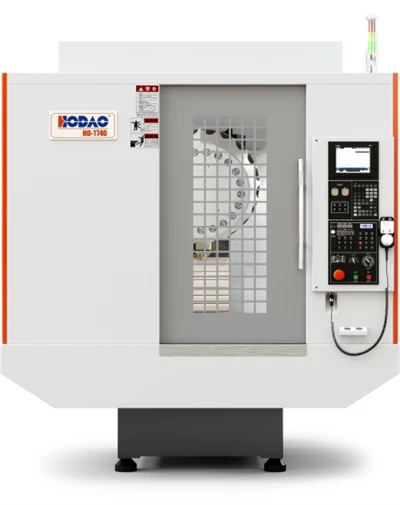
Now, let’s tie that to what actually happens inside a CNC machining center. When an operator uploads a G-code program to our machine, the controller sends electrical signals to the servo motor, which spins at a set speed and direction. The servo motor’s output shaft is connected directly (or through a gearbox, for higher-torque applications) to the end of the ball screw shaft. As the shaft spins, the steel balls in the nut roll along the threads, pushing the nut—and the linear axis it’s mounted to—exactly the distance that the screw’s pitch dictates. Most ball screws used in CNC work have a pitch of 5mm, 10mm, or 20mm, meaning one full rotation of the screw moves the nut 5, 10, or 20mm. The precision of that pitch is ground to tolerances of microns, not thousandths of an inch, which is why you can get sub-micron accuracy on a finished part.
I’ve seen this in action dozens of times with our customers. A few years back, we had a customer in the medical device industry who was making orthopedic hip stems that required a surface finish of Ra 0.8 and a dimensional tolerance of ±0.002 inches along the entire length of the stem. They were using a competitor’s machine that had a generic lead screw, and they were scrapping 12% of parts because of axis movement inconsistency. We retrofitted one of our machining centers with a pair of high-precision, preloaded ball screws, and within the first week, their scrap rate dropped to less than 1%. That difference didn’t come from a new cutting tool or a better controller—it came from the ball screw being able to move the axis 100 times more accurately and consistently than their old screw.
Another key role ball screws play is handling the load of the cutting process. When you’re machining a hard material like titanium or hardened steel, the cutting tool exerts significant force on the workpiece, which translates back through the table and axis to the ball screw. A good ball screw is designed to handle both axial load (the force pushing straight along the screw’s length) and radial load (sideways force from the cut). The steel balls distribute that load evenly across the screw’s threads, so the stress isn’t concentrated in one small spot. That means the screw doesn’t wear out quickly, even under heavy, continuous cutting. In our machining centers, we size each ball screw based on the axis load, the maximum feed rate, and the type of material our customer works with. For example, a machine we build for aerospace machining has a Z-axis ball screw rated for 10,000 Newtons of axial load, which is enough to handle the force of roughing cuts on 6061 aluminum or 4140 steel without any deflection. Deflection is another big one—if the screw bends under load, the axis will move slightly off its path, ruining the part. Ball screws have a much higher rigidity than lead screws, so deflection is minimal, even during heavy cuts.
Friction and heat are also critical factors here. When you have a lot of sliding friction, the screw and nut can get hot as the machine runs for hours or days straight. That heat causes the screw to expand, which changes its pitch, and that changes the linear movement of the axis. Over a long production run, that expansion can add up to thousands of an inch, which is enough to throw off a precision part. Ball screws, with their rolling friction, generate very little heat, so thermal expansion is almost negligible. We usually install temperature sensors near the ball screw on our high-precision models, just to monitor it, but in 10 years of building these machines, we’ve almost never had a thermal expansion issue with properly sized and maintained ball screws.
I should also mention the maintenance side, because that’s a big part of what our customers care about. Ball screws are almost maintenance-free when they’re installed correctly, which is a huge plus for shops that run 24/7. All you have to do is lubricate them regularly—usually with a high-quality industrial grease every 6 to 12 months, depending on how much the machine runs. Lead screws require more frequent lubrication, and the sliding surface wears out over time, so you have to replace them every few years. Ball screws can last 10 to 15 years or more with proper lubrication, even in heavy use. I had a customer last year who bought one of our machines in 2008, and when we serviced it last year, the original ball screw on the X axis still had less than 10 microns of wear. That’s unheard of with old lead screw technology.
Now, not all ball screws are created equal, and that’s why as a supplier, we take a lot of care in selecting which ones to use in our machining centers. There are three main types of ball screws: precision ground, roll-formed, and precision ground with a customized thread profile. Roll-formed ball screws are cheaper, made by cold-forming threads on a steel shaft, and they have tolerances of around 0.05mm per meter of length. That’s fine for hobbyist machines or low-precision parts where accuracy isn’t critical, but for industrial CNC machining centers, that’s not good enough. We only use precision-ground ball screws, which are made by grinding threads to exact tolerances, with accuracy as tight as 2 microns per meter. We also use preloaded nut designs, which clamp the two halves of the nut together to eliminate any backlash. That preload has to be calibrated correctly, though—too little and you still have play, too much and you add extra friction and wear on the balls and threads. Our technicians spend hours testing and calibrating each machine’s ball screws before it leaves our facility, so our customers never have to worry about that adjustment.
Another thing to consider is the lead time and availability of ball screws. When a shop is in the middle of a big production run, the last thing they want is for a critical component to fail. We work with long-term partners that manufacture ball screws to our exact specifications, so we can get replacements quickly if needed. We also keep spare ball screws for our most popular machine models in our warehouse, so if a customer has an issue, we can ship a replacement within 24 hours, no waiting for weeks on a custom order. That reliability is why our customers keep coming back to us—we don’t just sell a machine, we sell the support to keep it running when they need it.
I’ve had customers ask me before, “Can’t I just buy a cheap ball screw to save money?” Sure, you can, but you get what you pay for. A roll-formed ball screw might cost half as much as a precision-ground one, but it will wear out in 2 to 3 years, it can’t hold tight tolerances for long runs, and you’ll end up scrapping more parts. For a shop making high-value parts, like aerospace components or medical devices, the cost of scrap and downtime is way higher than the extra cost of a good ball screw. We always advise our customers to think long-term, not just the upfront price of the machine. A machining center with high-quality ball screws will pay for itself in less than a year in lower scrap rates, less maintenance, and higher productivity.
Let’s wrap this up by putting it all together. The ball screw isn’t just a part inside a CNC machining center—it’s the core component that makes precise, repeatable linear motion possible. It converts the rotational power of the servo motor into the exact movement that cuts, mills, or drills the shape of the part you need. It eliminates backlash to ensure tight tolerances, handles the heavy loads of tough cuts with minimal deflection, reduces heat to keep runs consistent, and lasts for years with very little maintenance. As a CNC machining center supplier, we don’t cut corners on ball screws because we know that’s where performance starts. Every machine we build is paired with a high-precision, preloaded ball screw, sized and calibrated for the specific needs of the work our customers do.
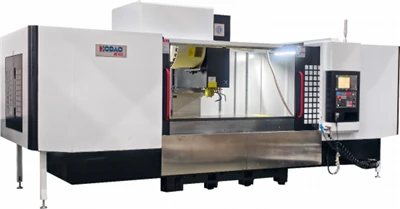
If you’re in the market for a new CNC machining center, or you’re looking to upgrade your current machine to get better accuracy and lower downtime, we’d be happy to talk through your needs. Our team has decades of experience working with shops in aerospace, medical, automotive, and general machining, and we can help you find the right machine with the right ball screw configuration for your applications. Whether you’re a small job shop making custom parts or a large facility running 24/7 production, we can tailor a solution that fits your budget and your quality standards.
Engraving and Milling Machine References
- Oberg, E., Jones, F. D., Horton, H. L., & Ryffel, H. H. (2016). Machinery’s Handbook (31st ed.). Industrial Press Inc.
- Bolton, W. (2017). Mechanical Engineering Systems (5th ed.). Routledge.
- ISO 10360-2:2009, Geometrical Product Specifications (GPS) — Acceptance and reverification tests for coordinate measuring machines (CMM) — Part 2: CMMs used for measuring linear dimensions. International Organization for Standardization.
- Ball Screw Technology Association. (2020). Ball Screw Design and Application Handbook. Industrial Automation Manufacturers Association.
Taizhou Qiyang Trading Co., Ltd.
As one of the most professional CNC machining center manufacturers and suppliers in China, we’re featured by quality products and good price. Please rest assured to buy bulk CNC machining center for sale here and get quotation from our factory. Customized orders are welcome.
Address: Zhenhai Village, Binhai Town, Wenling City, Taizhou City, Zhejiang Province
E-mail: qycncmachine@outlook.com
WebSite: https://www.qycncmachine.com/
