If you’ve ever walked the floor of a machine shop and seen a Horizontal Machining Center (HMC) in action, you know why these machines are often the go-to for high-volume, precision work—especially for parts that need to be accessed from multiple sides. As someone who’s been an HMC supplier for years, I get asked all the time, “Why would we not just buy an HMC for every job?” The truth is, as powerful as they are, HMCs have real limitations that can make them a bad fit for certain projects. I’m not here to bash HMCs—we sell them, so I’d love for you to buy one—but being transparent about their downsides saves both sides from headaches down the road. Horizontal Machining Center

First off, let’s talk about footprint. An HMC isn’t the compact tabletop mill you might have in a small toolroom. These things are huge. We’re talking a machine that can take up 15 to 25 square feet of floor space, not including the chip conveyors, coolant systems, and auxiliary parts racks you need around it. Compare that to a Vertical Machining Center (VMC), which is way smaller for the same cutting capacity. If your shop is tight on space—say, you’re a small job shop with only 1,000 square feet total—bringing in an HMC might mean rearranging your entire layout, pushing other equipment into hallways, or even renting extra space just for the machine. I’ve had customers come to us excited about an HMC for their 20,000-part run, only to realize they have nowhere to put it. That’s a big red flag right there. And don’t forget, the foundation for an HMC needs to be heavy-duty too—no wobbly concrete slab here. Some older shops have floors that can’t support the weight, which means pouring a new slab before even uncrating the machine. That’s extra cost no one budgets for.
Next up is setup complexity. HMCs are built for multi-sided work, but that capability comes with a steep learning curve. Unlike a VMC, where you load a part, set the Z-axis, and run the program, an HMC requires fixturing that can hold the part steady when you spin it around for the next side. A lot of shops rely on tombstone fixtures—those big, blocky setups with multiple parts mounted at once—but setting up a tombstone isn’t like bolting a part to a VMC table. You have to make sure every surface is perfectly aligned, because even a 0.001-inch error in alignment between two sides of the tombstone will throw off your part’s dimensions. That means more time spent on setup, more calibration checks, and a higher chance of scrap if your team isn’t experienced with HMC fixturing. I’ve seen new HMC owners waste their first week just getting the fixturing dialed in, when they could’ve been cutting parts on a simpler VMC. And if you’re running small batches—say, 10 parts or less—the setup time might actually outway the time you spend cutting parts. Why spend 4 hours setting up a tombstone for 10 parts when you could load each part on a VMC in 10 minutes?
Then there’s accessibility and maintenance headaches. With a VMC, you can pop open the door, reach in, and grab a broken tool or adjust a part in 30 seconds. HMCs are enclosed in a big, sealed cabinet for chip and coolant containment—you’re basically working inside a box. If a tool breaks mid-run, you have to shut down the machine, unlock the doors, go inside, and fix it. That’s way slower, especially for long runs. Even routine maintenance is a pain. Changing the filters for the coolant, checking the spindle bearings, or accessing the tool changer parts all require lifting panels or even removing entire sections of the machine. Our service techs will tell you HMC jobs take twice as long for routine service as VMC jobs, because everything is tucked away. And don’t get me started on chip management. HMCs produce a TON of chips, and if your chip conveyor isn’t sized right, it’ll get backed up, causing the machine to shut down. Cleaning chips out of the bottom of an HMC takes hours, and if you skip it, the chips can scratch parts or damage the machine’s internals. For shops that don’t have a dedicated team for chip handling, that’s a constant headache.
Another big limitation is cost—both upfront and ongoing. HMCs are way more expensive than VMCs, often 2 to 3 times the price for similar cutting power. A basic VMC might run you $50k to $100k, but an entry-level HMC is $150k to $300k, and high-precision models can go over half a million. That’s a huge investment, especially for small businesses. But it’s not just the purchase price. HMCs use more power—those big spindles and axis drives draw way more electricity than a VMC. Tooling costs are higher too, because HMCs often use bigger tools and special holders designed for the rotary table. And if you’re using a pallet changer (which most HMCs have for lights-out runs), those pallets cost thousands of dollars each. For a shop that only runs 5,000 parts a year, the extra cost of an HMC might not make financial sense compared to a VMC. I’ve had customers buy an HMC thinking it would cut their per-part cost, only to realize the overhead was too high for their low volume.
Wait, let’s not forget about part limitations. HMCs are built for mid-size to large parts—think engine blocks, pump housings, or aerospace components that are too big or too heavy for a VMC’s table. If you’re working on small parts, like phone brackets or small fasteners, an HMC is overkill. The tool changers, pallets, and rotary table are all designed for big loads, so you’re wasting space and capability on tiny parts. You’d be better off with a multi-spindle VMC or even a Swiss-type lathe for those small jobs. Also, if your parts only need to be machined on one or two sides, an HMC’s 4-axis capability is just extra. You’re paying for a feature you’ll never use. I’ve seen shops with HMCs that only run 2-axis jobs, and that’s like buying a pickup truck to commute to work every day—you’re paying for capability you don’t need.
And let’s talk about the skill gap. HMCs aren’t machines you can set up and run with a basic machinist training. They require programmers who know how to write code for 4-axis rotary movement, fixturing specialists who can design tombstone setups, and operators who can troubleshoot the enclosed workspace. If your shop has a team that’s only ever worked with VMCs, you’ll need to invest in training—either sending your people to classes or hiring specialized talent. Good HMC operators are hard to find, and they command higher wages. For a small shop that can’t afford to train their existing team, an HMC might end up sitting idle, which is a total waste of money. I’ve had customers tell me they bought an HMC, then realized no one on their team could run it, so it’s been gathering dust for six months. That’s the last thing we want, because we want our customers to get real value from our machines.
Don’t get me wrong—HMCs are amazing when they’re the right fit. If you’re running high-volume parts that need multiple sides machined, if you have the floor space, if your team is experienced, and if the cost makes sense, an HMC will save you time and money. But if any of those boxes aren’t checked, you’re better off looking at other options.
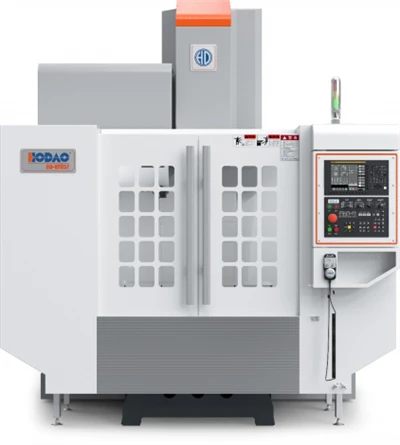
At the end of the day, we’re here to match you with the right machine for your job, not just sell you an HMC. If you’re considering an HMC and want to talk through whether it’s a good fit for your shop—whether you’re dealing with space constraints, low volume, or a team that’s new to these machines—reach out to our team for a no-pressure chat. We can walk through your projects, break down costs, and even suggest alternatives if an HMC isn’t the right call. No hard sells, just straight talk, because we want you to be happy with your purchase long term.
Horizontal Machining Center References
- Machinery’s Handbook, 31st Edition, Industrial Press Inc., 2020
- Modern Machine Shop, "HMC vs. VMC: Key Differences for Job Shops", 2022
- Custom Machining Association, "Equipment Selection for High-Volume Precision Parts", 2021
- Haas Automation, Inc., Horizontal Machining Center Operations Manual, 2019
Taizhou Qiyang Trading Co., Ltd.
As one of the most professional horizontal machining center manufacturers and suppliers in China, we’re featured by quality products and good price. Please rest assured to buy bulk horizontal machining center for sale here and get quotation from our factory. Customized orders are welcome.
Address: Zhenhai Village, Binhai Town, Wenling City, Taizhou City, Zhejiang Province
E-mail: qycncmachine@outlook.com
WebSite: https://www.qycncmachine.com/
