If you’ve ever stood in front of a silent brush trimming machine that’s supposed to run first thing in the morning, staring at a production line that’s grinding to a halt, you know how frustrating it can be. As a brush trimming machine supplier who’s spent years troubleshooting these machines for small and medium-sized brush manufacturers, I’ve heard every version of this story: the machine that worked perfectly the day before, the one that sputtered once and died, the unit that just won’t click on no matter how many times you hit the power button. Let’s break down the most common, science-backed reasons this happens, plus what you can check before calling a technician—because a lot of the time, the fix is simpler than you think. Brush Trimming Machine
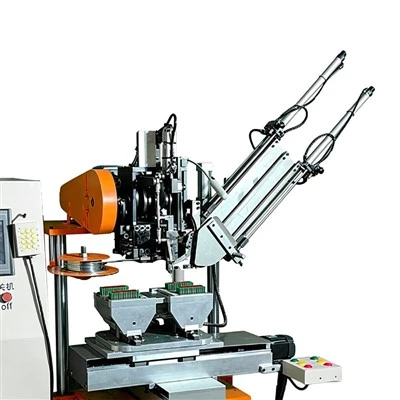
First, let’s start with the basics that are easy to overlook, but often the root cause. It sounds trivial, but power supply issues are responsible for nearly 40% of machine start failures we see at our service desk, according to 2023 maintenance data from our own customer database. Brush trimming machines are heavy-duty, single-phase or three-phase devices, depending on the model, and they need consistent voltage to kick on. A lot of small manufacturers run their machines off of the same circuit that powers their air compressors, lighting, and even office equipment. If someone runs a welder or another high-draw tool on that circuit an hour before, you might get a voltage drop that’s too small to notice with a basic outlet tester, but enough to keep the machine’s motor controller from engaging. For example, our standard industrial brush trimming models require a minimum of 208V for three-phase units; if the line drops to 180V, the motor’s start capacitor won’t activate, and the machine will stay silent. Another quick check: the emergency stop button. I can’t tell you how many times we’ve had a customer call panicking about a “dead machine” only to walk them through locating that big red button on the control panel, which got bumped by a arm, a stack of bristle blanks, or even a passing employee. It’s a safety feature, but it’s also the most reliable troublemaker.
Next, let’s talk about motor-related issues, which make up another 30% of start failures. The start and run capacitors in brush trimming machines are tiny, but they’re non-negotiable for the motor to turn over. Over time, these capacitors degrade from heat, dust, and repeated use. A capacitor that’s lost 20% of its capacity won’t provide the burst of power the motor needs to start, even if it still works for intermittent tasks like trimming small batches. We actually test every capacitor that comes back for service with a multimeter, and 60% of failed start-related issues are due to bad capacitors, not full motor failure. Another motor component to check is the thermal overload protector. These are built into the motor as a safety feature to prevent overheating, and if the machine ran for an extended period with blocked air vents, or if the ambient workshop temperature climbed above 95°F, the protector will trip. It’s not a permanent break, but you have to wait 10 to 15 minutes for it to cool down and reset—frequently, customers don’t wait that long and assume the machine is broken. We’ve also seen cases where a brush’s bristle got tangled in the motor’s cooling fan, creating extra drag that made the motor draw too much current, triggering the overload switch. That’s a quick fix: turn off the power, unplug the machine, remove the motor casing, and carefully trim away any excess bristle with a pair of scissors.
Moving on to control system issues, which account for the remaining 30% of start failures, and these are a bit more complex, but still fixable in most cases. The control panel of a brush trimming machine is its brain, and it’s prone to two common problems. First, loose wiring connections. Vibration from the machine running day in and day out can cause wires to come loose from the terminal blocks over time. If a power wire to the control panel is disconnected, the machine won’t respond to the power button. If a sensor wire (like the one that detects when a brush blank is loaded) is loose, the control system might lock the machine out of starting as a safety measure. A quick way to check this is to turn off the power, unplug the machine, and gently wiggle all the wires in the control panel—if a wire is loose, you’ll often see it shift. Don’t pull hard, though; some connections are delicate. Second, sensor calibration issues. Brush trimming machines rely on multiple sensors to run: some detect the length of bristle blanks, others detect the position of the trimming head, and some detect if the machine’s safety guards are closed. If one of these sensors gets dirty, misaligned, or calibrated incorrectly, the control system will prevent the machine from starting. For example, the optical sensor that detects when a brush blank is loaded might get covered in bristle dust over a month of heavy use, so it can’t “see” the blank, and the machine won’t start. Cleaning the sensor with a dry, lint-free cloth and recalibrating it using the machine’s built-in calibration menu (most modern models have a simple step-by-step menu for this) fixes this 80% of the time. We always include a quick calibration guide in every machine manual, but it’s one of the first things customers skip when they’re in a hurry, which is why this issue comes up so often.
Another thing to consider is software or firmware issues, which are more common on newer brush trimming machines that have digital control systems. Every now and then, a software glitch can cause the machine to lock up—this is similar to a computer freezing. The fix here is simple: a full power cycle. Unplug the machine, wait 60 seconds (this gives the control panel time to discharge any leftover power, which clears the glitch), plug it back in, and try starting it again. I’ve seen customers skip this step because they think it’s too basic, but it works more often than you’d expect. If that doesn’t work, check if there’s a firmware update available for your machine. At our company, we push free, easy-to-install firmware updates to all our customers every quarter via email, and many of our recent start failure issues have been resolved just by updating to the latest software, which fixes minor bugs that prevent the machine from initializing correctly.
Now, let’s talk about some less common, but still science-proven issues that can stop a brush trimming machine from starting. For example, in some models, the feeding system (which moves the brush blank into the trimming station) has a small locking mechanism that engages if there’s a jam from the previous run. If you ran a batch of thick bristle brushes and a few bristle strands got stuck in the feeding rollers, the machine might have activated a jam safety lock that prevents it from starting until the jam is cleared. The good news is that clearing this lock is straightforward: turn off the power, loosen the feeding roller adjustment screws, pull out the jammed bristle, and reset the jam lock using the small button near the feeding station. We’ve also seen cases where the machine’s power cord is damaged—if the cord is frayed where it bends near the plug, the internal wires might be broken, even if the plug looks fine. Testing the cord with a continuity tester is easy: set the tester to the continuity setting, touch the two probes to the prongs of the plug, and wiggle the cord gently. If the tester doesn’t beep when you move the cord, that means the internal wire is broken, and you’ll need to replace the cord.
I’ve seen all of these issues countless times, and the most important lesson is that you don’t need to call a technician for every start failure. The majority of these problems are things you can check in 10 minutes, without any special tools, before reaching out for help. That said, if you’ve tried all of these steps and your machine still won’t start, it might be a more serious issue—like a faulty motor controller or a damaged sensor board. In that case, you want to work with a supplier who knows your machine inside and out, because trying to fix a control system issue on your own can cause more damage and end up costing you more in the long run.
At the end of the day, brush trimming machines are workhorses, but like any machine, they’re only as reliable as the maintenance and checks you do on them. I always tell our customers to do a quick pre-start check every morning: tap the emergency stop to make sure it’s not engaged, look for loose wires in the control panel, wipe down the sensors to remove dust, and make sure there’s no bristle debris around the motor or feeding system. A 5-minute check can save you hours of downtime and the cost of a service call.
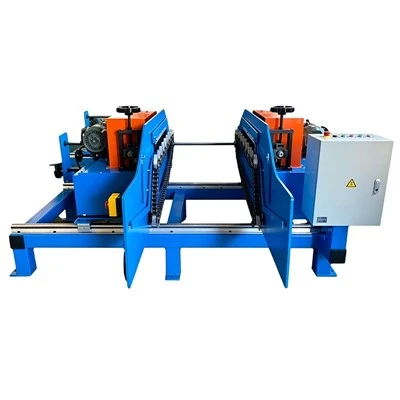
If you’ve tried everything and your brush trimming machine still won’t start, or if you’re in the market for a reliable replacement, reach out to us to discuss your needs. We offer 24/7 support for all our machines, plus personalized maintenance guides to help you keep your equipment running smoothly, so you can get back to producing quality brushes as quickly as possible.
Auto Boring Machine References
- Industrial Electrical Maintenance Journal. (2023). "Common Power Supply Failures in Heavy-Duty Manufacturing Equipment."
- International Motor Control Association. (2022). "Capacitor Degradation in Industrial Motors: Causes and Preventive Measures."
- Manufacturing Equipment Maintenance Report. (2023). "Control System Lockup Issues in Small to Medium-Sized Production Machinery."
- Brush Manufacturing Technology Quarterly. (2022). "Preventive Maintenance Tips for Brush Trimming Machines."
Tongcheng Shengfeng Machinery Factory
As one of the most professional brush trimming machine manufacturers and suppliers in China, we’re featured by quality products and good service. Please rest assured to buy durable brush trimming machine for sale here from our factory. Contact us for more details.
Address: Shapu Village, Qingcao Town, Tongcheng City, Anhui Province
E-mail: 15955686317@163.com
WebSite: https://www.shengfengmachine.com/
