If you’ve ever worked in industries like oil & gas, water treatment, or power generation, you know gate valves are the unsung heroes of piping systems. These big, sturdy valves do one simple job: stop or let full flow go through a pipe, no tricks, no partial tweaks. But here’s the thing—they don’t last forever if you don’t take care of them. As a gate valve supplier, I get so many calls from folks who say, “My valve just stopped working out of nowhere!” Most of the time? It’s not a manufacturing defect. It’s just skipped maintenance. Gate Valves

Let’s break this down straight—no jargon, no fancy sales fluff. Gate valve maintenance isn’t about overcomplicating things. It’s about checking the small, regular stuff before it turns into a major breakdown that shuts down a whole plant. I’ve seen it happen: a 10-minute check every quarter would’ve saved a client $50k in unplanned downtime. So let’s start with the basics.
First, why do gate valves even need maintenance in the first place? Unlike ball valves or butterfly valves that handle frequent on/off cycles, gate valves are usually meant to stay fully open or fully closed. They’re not for adjusting flow rates mid-job—turning the wheel a little or half-sticking it wears down the gate, stem, and seat way faster. Plus, they sit in pipes carrying all kinds of stuff: gritty water, crude oil with sulfur, chemicals that eat away at metal. Over time, that stuff gets into the gaps between the gate and the seat, or coats the stem, or rusts the valve’s body. If you ignore that, the next time you need to open or close it, the wheel might spin uselessly, or the gate won’t seat tight, and you get a leak.
So what does actual maintenance look like? Let’s split it into daily/weekly checks (the quick stuff) and quarterly/annual deep dives (the fix-the-problems-in-time stuff). The daily stuff? If you’re onsite, just a quick visual check. Look for any wet spots around the valve’s stem or body—those are leaks. Check if the handwheel is loose, or if it’s harder than usual to turn when you operate it. That’s a red flag. If you’re not onsite, make sure your remote monitoring systems are picking up any pressure drops around the valve—leaks cause pressure loss, after all. These 2-minute checks catch issues before they blow up.
Then the quarterly deep maintenance, which is where most people slack. Let’s start with the stem—this is the part that goes up and down when you turn the handwheel. It’s usually exposed, so it gets dirty, corroded, or full of gunk. First, you need to clean it: wipe off any grease, grime, or rust with a soft rag and a mild solvent—nothing too abrasive, you don’t want to scratch the stem. Then, lubricate it. Wait, not just any lube—use a high-pressure, waterproof grease made for valve stems. I tell all my clients: skip the cheap auto grease. It’ll wash off in a week when the valve’s in a wet line. Apply a thin, even coat, not a glob—too much gunk just traps more dirt.
Next, the gate and seat. This is the part that actually stops flow. If the valve’s closed, the gate presses tight against the seat to seal. If there’s grit or corrosion there, you won’t get a perfect seal, so you leak. To check this, you’ll need to partially open the valve just a little—no need to crank it all the way. Flush a little water or the line’s fluid through the gap to blow out any debris stuck between the gate and seat. Then, close it tight and check for leaks. If you still have a leak, you might need to remove the bonnet (the top cover of the valve) to inspect the gate and seat for scratches or pitting. A lot of times, a quick resurfacing with a fine emery cloth fixes minor issues—no need to replace the whole valve.
Wait, also, don’t forget to operate the valve fully every few months. Like I said earlier, gate valves aren’t meant to be half-open. If you leave a gate half-open for years, the gate can get stuck right there—corrosion builds up, and it won’t move all the way up or down when you need it. So every quarter, grab that handwheel, turn it all the way open, then all the way closed, a few times. That keeps the gate from seizing in the mid-position. I had a client last year who ignored this—his gate valve was half-open for 3 years, and when a pipe break happened, he couldn’t close it at all. Had to replace the whole valve during a shutdown that cost him $120k. Ouch.
What about bigger issues that pop up? Let’s talk about common problems and how maintenance fixes them. Stem leakage is the #1 complaint I get. That’s usually from worn-out packing—packing is the material around the stem that stops fluid from leaking out. Over time, it compresses or dries out, so fluid seeps past the stem. Fixing that isn’t hard: you just adjust the packing gland bolts a little, or replace the packing every year. Easy.
Another big one: stuck valves. Like I said, that’s usually from gunk or corrosion on the stem or gate. Some people use brute force—wacking the handwheel with a hammer—but that can break the stem or crack the valve body. Bad move. If it’s stuck, first, lube the stem really well, wait an hour, then try turning it slow. If that doesn’t work, don’t force it—call a professional, or if you’re working with valves I supply, reach out to my team for guidance. We’ve helped tons of clients free stuck valves without breaking anything.
Also, if you’re working in extreme environments—high pressure, high temperature, or corrosive fluids—you need to adjust your maintenance schedule. A gate valve in a water treatment plant with raw sewage might need monthly checks instead of quarterly. A valve in an oil refinery with hot crude? More frequent stem lubrication. I don’t do one-size-fits-all when selling valves, and maintenance isn’t one-size-fits-all either.
Wait, let’s address a myth I hear all the time: “If the valve worked last time, it’s fine.” No. Pipes have flow, so particles are moving through them 24/7. Even if you only use the valve twice a year, every time it’s open, tiny bits of grit can get stuck, and every time it closes, it might not seat right. So consistent maintenance is non-negotiable.
As a gate valve supplier, I don’t just sell valves and ghost you. I know that a valve that works is a repeat customer, and also, I’ve seen way too many preventable breakdowns. That’s why I always tell new clients: don’t wait for your valve to fail. Schedule regular checks, stick to a maintenance log, and if you notice something off—even a tiny hard-to-turn handwheel—don’t ignore it. A 5-minute fix now saves you days of downtime later.
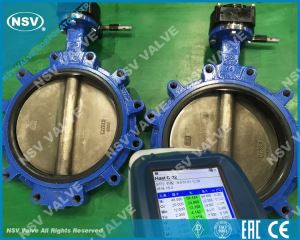
If you’re reading this and thinking, “I need to get on top of my gate valve maintenance,” let’s chat. Whether you need tips specific to your system, replacement parts, or even a consultation on your current maintenance routine, my team and I are here to help. We don’t push unnecessary services—we just want your valves to work when you need them, no stress, no surprises.
Austenitic Alloy Valves References:
- American Water Works Association. (2020). Standard Practice for Maintenance of Valves in Water Transmission and Distribution Systems. AWWA Manual M9.
- Hydraulic Institute. (2019). Valve Maintenance Guidelines for Industrial Piping Systems. HI Technical Report 102.
- API 6D. (2021). Specification for Pipeline Valves. American Petroleum Institute.
- National Association of Corrosion Engineers. (2022). Corrosion Maintenance Best Practices for Industrial Valves. NACE International Publication 35110.
NSV Valve Corporation
NSV Valve Corporation is one of the most professional gate valves manufacturers and suppliers in China, featured by quality products and good service. Please rest assured to buy gate valves made in China here from our factory.
Address: Puyi Road,Sanqiao Industrial Zone, Oubei Street, Yongjia County,Zhejiang,China
E-mail: info@nsvvalve.com
WebSite: https://www.nsvvalves.com/
